
The need for school psychologists in the United States has never been more pressing. With increasing student populations and a growing awareness of mental health issues, several states have launched initiatives to address these shortages and improve access to mental health services for students. Let's explore some of these initiatives and their goals.
North Carolina: The SOS Project
The North Carolina Department of Public Instruction is spearheading the School Psychologists Supporting our Students (SOS) Project with a budget of $6,394,193. The current ratio of one school psychologist per 1,956 students is far from the recommended 1:500. This project aims to increase the number of school psychologists in high-need and rural areas while enhancing their capacity to deliver evidence-based interventions.
- Recruitment and retention through bonuses
- Tuition assistance for aspiring school psychologists
- Specialized training in early intervention and suicide prevention
The initiative plans to hire 50 new school psychologists and retain over 70, reducing student-to-psychologist ratios by 25%.
Nebraska: Project NURTURE
Nebraska's Urban and Rural Training United to Replenish Educational Psychology (NURTURE) has a budget of $6,282,324. This initiative focuses on rural school districts through recruitment, retention, and respecialization efforts.
- Recruiting 8 credentialed psychologists for high-need LEAs
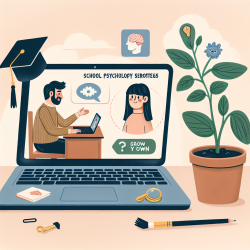
- "Grow-your-own" program for rural residents
- Aiming for a student-to-provider ratio of 588:1
Nevada: Expanding Access Through Partnerships
Nevada's project is funded at $7,000,000 and focuses on partnerships with local universities to expand the workforce pipeline. Their goal is to improve the student-to-provider ratio by 20% over four years.
- Sustainability through Medicaid reimbursement
- Aim to recruit, train, and retain at least 20 new school psychologists
Pennsylvania: Building on Success
Pennsylvania's initiative is backed by $8,821,338 and builds on successful programs implemented since 2023. It aims to increase the number of credentialed K-12 school psychologists through targeted recruitment and support.
- Sponsoring stipends for interns
- Prioritizing placement in high-need areas
Tennessee: Project INSPIRE
Tennessee's Project INSPIRE is funded at $8,423,520. It provides tuition reimbursement and support to remove financial barriers while establishing a re-specialization pathway for licensed psychological professionals.
- Aim to expand workforce rapidly
- Sustainable framework for early intervention and mental health support
The Impact Across States
The efforts across these states highlight a national commitment to improving mental health resources in schools. By addressing shortages through innovative strategies like "grow-your-own" models, financial incentives, and partnerships with higher education institutions, these initiatives promise not only immediate relief but also long-term sustainability.
The benefits are clear: reduced student-to-psychologist ratios mean more personalized attention for students who need it most. By equipping schools with adequately trained professionals, we can ensure that mental health issues are addressed promptly and effectively.
The Bottom Line:
The shortage of school psychologists is a critical issue that demands immediate attention. These state-led initiatives are steps in the right direction toward ensuring that every student has access to the mental health resources they need to succeed academically and personally.