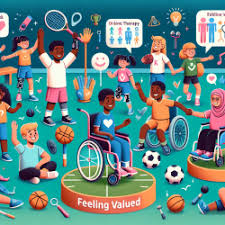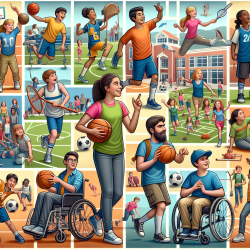
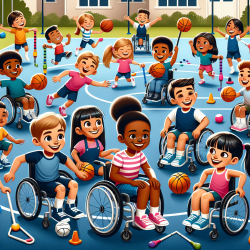
Physical education (PE) is more than just a school subject; it's a gateway to lifelong health and wellness. For students with disabilities, PE offers a unique opportunity to develop physical, mental, and emotional skills in an inclusive environment. By ensuring that all students have access to quality PE, we can help them build confidence, improve their physical abilities, and foster a sense of belonging.
Understanding Physical Education
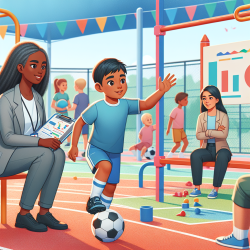
Physical education helps students learn about movement, develop motor skills, and understand the importance of staying active. Activities like jumping jacks, gymnastics, and organized sports not only enhance physical fitness but also promote teamwork and social interaction. For students with disabilities, these activities may require accommodations to ensure they can participate fully alongside their peers.
Legal Requirements for PE in Virginia
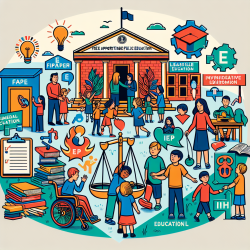
In Virginia, PE is mandatory for all students from kindergarten through 10th grade. This includes students with disabilities, who are entitled to a free appropriate public education (FAPE) under the Individuals with Disabilities Education Act (IDEA). This legislation mandates that students with disabilities must have the same opportunities to participate in PE as their peers without disabilities.
The Role of Adapted Physical Education (APE)
Adapted Physical Education (APE) is specially designed instruction that meets the unique needs of students with disabilities. APE aims to provide accommodations and modifications that allow these students to access the general education PE curriculum effectively.
APE is not a separate location; it's a service that can be delivered within the regular PE class or in a specialized setting if necessary. The goal is always to keep students integrated into the general education environment as much as possible.
Examples of Accommodations in PE
- Using larger and softer balls for activities to meet gross motor needs.
- Lowering volleyball nets for students with limited strength.
- Modifying rules such as allowing a hockey stick to kick a ball in soccer for wheelchair users.
- Reducing team sizes or activity areas to enhance participation and practice opportunities.
The IEP Team's Role in Adapted PE
The decision to provide adapted PE services is made by the Individualized Education Program (IEP) team. This team evaluates each child's needs and determines whether additional supports are necessary for participation in PE. If adapted PE is required, it becomes part of the student's IEP, detailing specific goals and adaptations needed.
Steps in Determining APE Needs
- Evaluation: The IEP team assesses whether the child requires extra services to engage in PE.
- Review: After evaluation, findings are discussed with parents encouraged to participate actively.
- Implementation: If APE services are recommended, they are included in the IEP with specified goals and adaptations.
The Role of Parents in Supporting Their Children
Parents play a crucial role in advocating for their child's needs within the school system. Understanding your child's rights regarding PE is essential. Engage with the IEP team to discuss necessary accommodations or adaptations that will enable your child to participate fully in grade-level activities.
If you believe your child requires adapted PE, initiate conversations with the IEP team about evaluating their needs. Ensure that any required services are clearly outlined in the IEP along with specific goals and time allocations.
For more information on supporting your child in physical education settings, please follow this link.