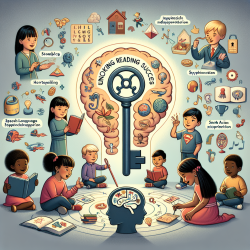

In the realm of education, particularly in special education, understanding the intricate relationship between language and reading is crucial. Language lays the groundwork for reading, and without it, reading would be an insurmountable task. To foster a comprehensive reading program, educators need to delve into the components of language that form this foundation.
Components of Language
Linguists have identified five basic components of language: phonology, morphology, syntax, semantics, and pragmatics. Each plays a vital role in language acquisition and subsequently in reading development.
Phonology
Phonology is the study of speech structure within a language. It involves understanding the patterns of basic speech units and pronunciation rules. The smallest units of sound are known as phonemes. For example, the word "cat" consists of three phonemes: /k/, /æ/, and /t/.
Morphology
Morphology examines the smallest units of meaning in a language called morphemes. These include base words like "book" or "run," as well as prefixes and suffixes that modify meaning. Understanding morphology is essential for vocabulary development and comprehension.
Syntax
Syntax refers to how words are arranged to form sentences. It encompasses grammar rules that dictate sentence structure. Syntax helps us understand that "The cat chased the mouse" conveys the same meaning as "The mouse was chased by the cat," despite different word orders.
Semantics
Semantics deals with meaning in language. It allows us to interpret figurative language and understand phrases like "time flies" or "kick the bucket." Semantics is culture-dependent and often poses challenges for non-native speakers or those from different cultural backgrounds.
Pragmatics
Pragmatics involves using language effectively in different contexts. It explains why we speak differently to our parents than to our friends. Understanding pragmatics is crucial for effective communication across various social settings.
The Role of Language in Reading Instruction
The National Research Council Committee emphasizes an integrated approach to reading instruction rather than a balanced one. This means creating a coherent strategy that adapts to students' developmental needs rather than equally dividing time among different reading components.
Instructional Components of Teaching Reading
An effective reading program includes explicit explanations, modeling, scaffolded practice, and engaging activities that meet students at their level of motivation and cognition. Key components include:
- Phonemic Awareness: Recognizing and manipulating sounds in words is predictive of future reading success.
- Phonics: Understanding the relationship between letters and sounds is vital for early reading development.
- Fluency: Reading smoothly with accuracy and expression ensures comprehension.
- Vocabulary: Expanding word knowledge enhances comprehension and communication skills.
- Comprehension: The ultimate goal of reading is to understand text meaningfully.
The Importance of Early Literacy Experiences
The expectation for a fully literate society drives attention toward early literacy experiences as a means to prevent reading failure. Identifying appropriate skills at different ages can guide effective instruction and intervention.
For more information on the components of language and reading instruction, please follow this link.