As educational methods evolve, virtual reality (VR) has emerged as a promising tool to enhance learning experiences. This blog explores the perceptions of Lebanese educators on integrating VR in classrooms, highlighting both opportunities and challenges.
The Promise of Virtual Reality in Education
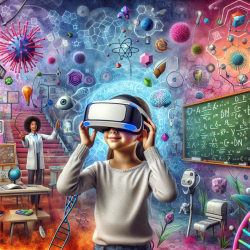
Virtual reality offers a unique opportunity to engage students by creating immersive learning environments. It allows learners to explore complex subjects such as history, science, and the arts in a more interactive manner. For instance, students can virtually visit ancient civilizations or conduct scientific experiments without leaving the classroom.
Educators' Perceptions and Readiness
A study involving 110 educators across Lebanon revealed enthusiasm for VR's potential but also highlighted concerns about its practical application. While 40.7% of respondents believe VR can enhance academic performance, challenges such as classroom management and the need for extensive teacher training were noted.
- Enhanced Engagement: 64.4% of educators recognize VR's role in increasing student engagement.
- Training Needs: 83% emphasize the importance of adequate teacher training for successful implementation.
- Resource Challenges: 73.7% acknowledge the need for additional resources to integrate VR effectively.
Status of VR Integration in Lebanese Schools
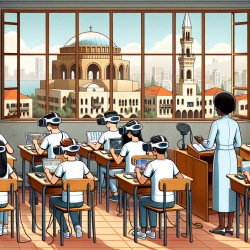
The adoption of VR in Lebanese schools is still minimal, with only 12.7% actively using it in classrooms. Many educators lack formal training, relying on personal research or informal workshops to understand VR technology.
Opportunities Presented by VR
VR is particularly effective in subjects requiring visualization of intricate processes. Science teachers find it useful for explaining complex biological processes, while language teachers see potential in enhancing conversational skills through virtual interactions.
Challenges Faced by Educators
The integration of VR presents several challenges:
- Cognitive Overload: Users may experience cognitive overload due to excessive information or tasks.
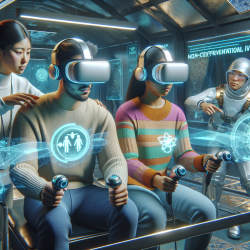
- Physical Discomfort: Some students report dizziness or disorientation during VR sessions.
- High Costs: The cost of VR equipment and maintenance poses significant barriers to widespread adoption.
- Lack of Training: Many educators require formal training to confidently use VR as an instructional tool.
The Path Forward: Recommendations for Successful Integration
To harness the full potential of VR in education, schools must prioritize comprehensive teacher training and establish robust technical support systems. Additionally, creating dedicated VR labs and forming partnerships with technology providers can help overcome financial constraints.
Sustainable Implementation Strategies:
- Professional Development: Offer targeted training programs to build educators' confidence and skills in using VR technology.
- Infrastructure Planning: Establish dedicated spaces for VR activities to minimize classroom disruptions.
- Curricular Alignment: Develop VR applications that align with national curriculum standards to ensure educational relevance.
The integration of virtual reality into Lebanese classrooms holds immense potential for transforming education. However, success hinges on strategic planning, adequate resources, and ongoing support for educators. As schools embrace this innovative tool, they must navigate the challenges to unlock its full benefits for students.
For more information, please follow this link.