The integration of Virtual Reality (VR) technologies into education holds immense promise for enhancing learning experiences. By offering immersive and interactive environments, VR allows students to engage with educational content in more meaningful ways. However, the adoption of VR in education is not without its challenges. This blog delves into teachers' insights on the potential of VR in education and offers recommendations for successful integration.
The Promise of Virtual Reality in Education
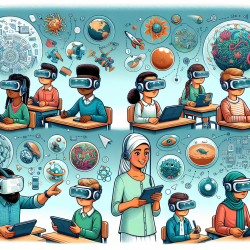
Virtual Reality (VR) is a computer-generated simulation that immerses users in a three-dimensional, interactive environment. It offers a unique opportunity to create an engaging learning experience by transporting students to virtual environments where they can interact with their surroundings. VR can be customized for various educational purposes, making it applicable across different school subjects.
The study published in the Journal of Educational Technology & Online Learning reveals a positive consensus among teachers regarding the necessity and impact of VR in education. Teachers recognize VR as a powerful tool that transcends physical boundaries and provides hands-on learning opportunities.
Challenges in Integrating VR into Education
Despite its potential benefits, integrating VR into educational practices poses significant challenges. These include high costs of devices, limited software availability, usability concerns, and the need for teacher training. Teachers have also expressed concerns about infrastructure constraints and the lack of support from parents and school management.
- Cost: The high price of VR devices and software subscriptions is a major barrier.
- Infrastructure: Limited access to compatible devices and internet connectivity hinders effective implementation.
- Training: Teachers require ongoing training to effectively integrate VR into their teaching practices.
Teacher Insights on VR Integration
The study surveyed 103 teachers from diverse educational backgrounds to understand their experiences with VR technologies. The findings indicate that while teachers see the value of VR in education, practical barriers need to be addressed for successful integration.
Teachers reported using VR for various educational activities such as virtual museum tours, city explorations, and interactive projects. However, many expressed the need for better access to resources and collaborative opportunities with colleagues to maximize the potential of VR in their classrooms.
Recommendations for Effective VR Integration
To overcome the challenges associated with VR integration in education, several initiatives can be recommended:
- Collaboration: Encourage collaboration among educators to share knowledge and resources related to VR applications.
- Training Programs: Implement tailored training programs that address specific challenges faced by teachers in using VR technologies.
- Resource Accessibility: Increase accessibility to cost-effective VR content and devices through institutional support and partnerships with technology providers.
Conclusion
The integration of Virtual Reality into education offers transformative potential by providing immersive learning experiences that enhance student engagement and understanding. By addressing practical barriers and fostering a supportive environment for educators, the educational community can unlock the full potential of VR technologies.
For more information, please follow this link.