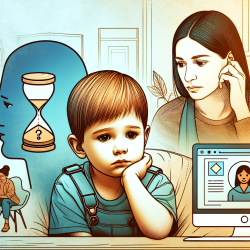

Many families ask a version of the same question: “Should my 5-year-old be this hard to understand?” It’s a reasonable concern—especially when kindergarten is approaching, social circles are expanding, and your child has big ideas they want to share. When speech is unclear, children can feel frustrated, parents can feel worried, and teachers may miss what a child is trying to communicate.
The encouraging truth is that speech clarity can improve dramatically with the right support. This post will help you understand what is typically expected at age five, what might be getting in the way, and how TinyEYE Therapy Services’ private online therapy can help your child be heard with confidence.
What does “hard to understand” mean at age 5?
“Hard to understand” can mean different things in different families. Some children are difficult to understand only when they’re excited or speaking quickly. Others may be unclear in most situations, even to familiar adults. It can also show up as:
- Frequent sound substitutions (for example, saying “tat” for “cat”)
- Leaving sounds off the ends of words (for example, “ca” for “cat”)
- Speech that sounds “mumbled” or rushed
- Difficulty with longer words or sentences
- Strangers understanding very little of what your child says
It’s important to remember: unclear speech is not a reflection of intelligence, effort, or parenting. Speech sound development is a complex coordination of hearing, motor planning, oral movement, language growth, and practice.
What is typical speech clarity for a 5-year-old?
By age five, many children are understood by unfamiliar listeners most of the time. They may still have a few developing sounds, but overall, their speech should be clear enough that teachers and peers can follow what they are saying without constant repetition.
That said, children develop at different rates. A child can be bright, social, and learning well—and still need targeted support to improve speech intelligibility.
A practical rule of thumb
If people outside your immediate family often say things like:
- “I can’t understand them.”
- “Can you translate?”
- “Tell them to slow down.”
…it may be time to consider a speech-language evaluation. The goal is not to label your child—it’s to understand what’s happening and what will help.
Common reasons a 5-year-old may be difficult to understand
There are several common patterns that can affect clarity. A speech-language pathologist (SLP) can determine what’s most relevant for your child, but here are frequent contributors:
1) Articulation differences
Articulation refers to how a child physically makes speech sounds. Some children have trouble placing their tongue, lips, or jaw to form certain sounds (like “r,” “l,” “s,” “sh,” “ch,” or “th”).
2) Phonological patterns
Phonology is about sound patterns. Many young children simplify words as they learn to talk. When these patterns persist longer than expected, speech can remain hard to understand. For example, a child might consistently replace back sounds (“k,” “g”) with front sounds (“t,” “d”).
3) Motor speech challenges
Some children know what they want to say but have difficulty coordinating the movements needed for clear speech. This can affect consistency (a word may be clear one day and unclear the next) and may require specialized therapy approaches.
4) Hearing history
Frequent ear infections or fluctuating hearing can impact how children learn and refine speech sounds. Even temporary hearing changes can affect sound development during critical learning windows.
5) Language growth and speech clarity happening together
Sometimes a child’s vocabulary and sentence length grow quickly, but their speech sound system hasn’t caught up yet. They have more to say than their speech clarity can currently support—leading to fast speech, dropped sounds, and frustration.
Why it matters: the social and learning impact
Speech clarity is about more than pronunciation. When children are hard to understand, they may:
- Repeat themselves often and feel discouraged
- Withdraw from speaking in groups
- Be misunderstood by peers, leading to social bumps
- Have difficulty with early literacy skills tied to sound awareness
- Get labeled as “shy” or “behavioral” when they are actually frustrated
Clear speech supports confidence. And confidence supports participation—at school, on the playground, and at home.
When should you seek speech therapy?
Consider reaching out for an evaluation or therapy support if any of the following are true:
- Your child is frequently hard to understand for unfamiliar listeners
- Your child becomes upset when asked to repeat
- Teachers or caregivers express concern about speech clarity
- Your child avoids talking in certain situations
- You notice persistent sound errors that don’t seem to be improving
Trust your instincts. Parents are often the first to notice when communication feels harder than it should.
What does speech therapy look like for a 5-year-old?
Effective therapy for young children should feel engaging and supportive—not like a drill session. A skilled SLP will typically:
- Assess which sounds or patterns are affecting intelligibility most
- Choose goals that create the biggest “clarity boost” first
- Use play-based activities to keep motivation high
- Teach your child how to make target sounds and practice them in words and sentences
- Help your child carry new skills into everyday conversation
Many children also benefit from short, consistent home practice. The best practice plans are realistic—simple routines you can actually fit into family life.
How TinyEYE Therapy Services’ private online therapy can help
Families often worry that online speech therapy won’t feel personal or effective for young children. In reality, many 5-year-olds respond extremely well to virtual sessions when they are designed with the child in mind.
TinyEYE Therapy Services provides online therapy services to schools, and that same expertise in delivering high-quality virtual support can be a powerful option for families seeking private therapy. With the right therapist, the right tools, and a clear plan, online therapy can help children make meaningful gains in speech clarity.
Benefits families often appreciate
- Convenience and consistency: Therapy can fit more smoothly into busy schedules, reducing missed sessions.
- Engaging digital activities: Many children are motivated by interactive games and visuals that support repetition without boredom.
- Family involvement: Parents can more easily observe strategies and learn how to support carryover between sessions.
- Comfortable environment: Some children speak more freely at home than in a clinic setting.
What to expect from a strong online therapy plan
Whether your child needs help with a few sounds or broader intelligibility support, a strong plan typically includes:
- Clear, measurable goals (so progress is visible)
- Practice at the right level (not too easy, not too hard)
- Frequent opportunities to speak and be successful
- Strategies for generalizing skills into real conversation
- Collaboration with caregivers and, when appropriate, the school team
How to support your child at home (without turning life into therapy)
You don’t need to correct every error or ask for constant repetition. In fact, too much correction can increase frustration. Instead, try supportive communication habits:
- Model, don’t pressure: If your child says “tat,” you can respond warmly, “Yes, a cat!”
- Slow it down together: Use a playful cue like “turtle talk” for slower speech during excited moments.
- Make space for success: Give your child time to finish their message without jumping in too quickly.
- Celebrate communication: Focus on the message first, then support clarity in a positive way.
If your child is in therapy, your SLP can recommend a short, targeted practice routine that matches your child’s goals—often just a few minutes a day.
A hopeful perspective
If your 5-year-old is hard to understand, it doesn’t mean something is “wrong.” It means your child may need a little more direct teaching and practice with speech sounds and patterns—just like some children need extra support with reading, fine motor skills, or attention.
Early support can make a meaningful difference, not only in how clearly your child speaks, but also in how confidently they participate in school and friendships. The goal is simple and powerful: helping your child say what they want to say—and be understood.
For more information, please follow this link.