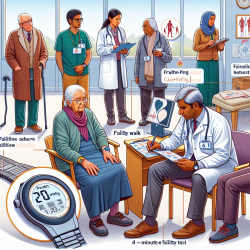

Understanding the Physical Frailty Phenotype
The Physical Frailty Phenotype (PFP) is a critical tool used to identify older adults at risk of adverse health outcomes. Traditionally, it includes performance-based measures such as grip strength and walking speed. However, in some clinical settings, these performance-based measures are challenging to implement, leading to the exploration of self-reported measures as substitutes.
Research Insights: Self-Reported vs. Performance-Based Measures
A recent study published in BMC Geriatrics titled Substitution of self-reported measures for objectively assessed grip strength and slow walk in the Physical Frailty Phenotype: ramifications for validity (Bandeen-Roche et al., 2023) explores the validity of using self-reported measures as substitutes for performance-based criteria in the PFP. The study reveals that self-reported measures may not accurately identify the same frail populations as performance-based measures.
Key Findings
- Self-reported difficulty walking ½ mile was used as a proxy for slowness, and difficulty with tasks such as transferring from a bed or chair or gripping with hands was used for weakness.
- There was a moderate agreement between self-reported and performance-based measures, with Kappa statistics ranging from 0.55 to 0.60.
- Self-reported measures often overestimated frailty in women compared to men.
- Subpopulations identified as frail by self-reported measures differed systematically from those identified by performance-based measures.
Implications for Practitioners
For practitioners, these findings underscore the importance of careful consideration when using self-reported measures in frailty assessment. While self-reported measures offer convenience, they may not always provide an accurate reflection of physical frailty. Therefore, practitioners should be cautious about relying solely on self-reported data, especially when making critical decisions about interventions and care plans.
Encouraging Further Research
This study highlights the need for further research to develop self-reported proxies that closely replicate performance-based measures. Such research could lead to more accurate and practical tools for assessing frailty in clinical settings where performance-based measures are not feasible.
To read the original research paper, please follow this link: Substitution of self-reported measures for objectively assessed grip strength and slow walk in the Physical Frailty Phenotype: ramifications for validity.