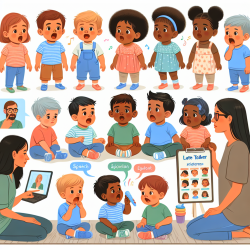

Why early identification matters in schools
In school settings, communication is more than “talking clearly.” It is how students learn, build relationships, regulate emotions, participate in classroom routines, and demonstrate what they know. Research and clinical practice consistently show that speech, language, and communication challenges can appear alongside academic, behavioral, and social-emotional concerns. When those communication needs go unrecognized, students may struggle longer than necessary—and the impact can extend into adolescence and beyond.
For school teams, the goal is not to “wait and see” whether a child grows out of a concern. Instead, it is to notice patterns early, document what you see, and refer for a speech-language evaluation when warning signs are present. Early detection and intervention are strongly associated with better long-term outcomes, particularly for expressive language, phonological skills, and vocabulary development.
What does a Speech-Language Pathologist (SLP) do today?
Many educators and families still associate SLP services primarily with articulation (speech sounds) or stuttering. While those are important areas, the scope of speech-language pathology is broader and includes:
Language form: grammar (syntax, morphology), speech sound system (phonology), and prosody (intonation, stress, rate)
Language content: vocabulary and meaning (semantics)
Language use: social communication (pragmatics), conversation skills, and “topic control”
Speech: articulation, fluency, and voice
Literacy connections: the oral language foundations of reading and writing
Feeding and swallowing: when oral-motor and sensory issues affect safety and development
In other words, SLPs support the skills students need to access instruction and express learning—whether the concern is obvious (very unclear speech) or subtle (difficulty understanding jokes, following multi-step directions, or organizing a narrative).
Risk factors that increase the likelihood of speech and language difficulties
Not every child with a risk factor will have a disability, but these variables should raise the team’s level of attention and monitoring:
Family history of speech and language delay
Male gender
Premature delivery
Low birth weight
Marked hearing concerns or known medical/developmental conditions (including craniofacial differences)
In schools, risk factors matter most when they appear alongside functional concerns—such as limited peer interaction, persistent difficulty learning early literacy skills, or frequent “noncompliance” that may actually reflect weak comprehension.
Communication and mental health: an important overlap
Communication impairments and psychiatric or behavioral diagnoses often overlap. For example, difficulties in pragmatic language (the social use of language) may be associated with higher risk for autism spectrum differences. Language weaknesses can also co-occur with ADHD, anxiety, oppositional behaviors, and mood concerns. In many cases, communication breakdowns contribute to frustration, social isolation, and reduced self-esteem—especially as academic and peer demands increase.
This is why school collaboration is essential. When educators, counselors, psychologists, nurses, and SLPs share observations, students are more likely to be identified early and supported effectively.
Warning signs by age: when to refer for an SLP evaluation
The checklist below translates key developmental warning signs into school-friendly language. A single item may not confirm a disorder, but patterns, persistence, and impact on participation are strong reasons to refer.
Birth to 8 months
Notable feeding difficulties (sucking, swallowing, or coordinating feeding)
Notable medical, motor, vision, or hearing concerns
Little exploratory play or limited interest in the environment
Limited range of facial expressions or engagement with caregivers (little reciprocity)
Limited vocalizations
8 to 12 months
Little to no joint attention (not sharing attention with an adult about an object/event)
Limited gesture use (pointing, showing, reaching to communicate)
Little affect display or limited responsivity to others
Rarely communicates needs (few requests, protests, or bids for attention)
Babbling is very restricted (not using more than one consonant-vowel pattern)
12 to 18 months
Lack of vocal/verbal/gestural turn-taking
Difficulty understanding simple words or one-step directions
Limited object play (not searching for objects, limited awareness of object function)
Restricted range of meanings (few purposeful words like “more,” “up,” “bird”)
Very low frequency of communication (fewer than two communicative acts per minute)
18 to 24 months
Limited pretend play or difficulty combining objects in play
Meager vocabulary at 24 months (the “50-word” milestone is a useful red flag for monitoring and screening)
Virtually no multiword combinations
Limited reciprocal interaction (“circles of communication” are weak or absent)
Rarely initiates communication and mostly echoes or imitates
2 to 3 years
Plays alone much of the time; limited symbolic play; limited enjoyment in peer interaction
Limited grammatical complexity (few sentences with more than one verb)
Does not use language for a range of purposes (requesting, protesting, greeting, commenting)
Mostly imitates language rather than generating novel messages
Produces few topic-related utterances and fewer than five communicative acts per minute
Speech is difficult for familiar adults and strangers to understand
Persistent dysfluencies (repetitions, prolongations, frequent hesitations)
Frequent “noncompliance” that may reflect difficulty understanding language
3 to 4 years
Not usually intelligible to unfamiliar listeners
Limited conversational skill (difficulty starting, maintaining, or changing topics; limited turn-taking)
Little vocabulary growth over time
Minimal use of grammatical markers (tense, person, number)
Does not talk about past/future events or begin telling simple narratives
Behavior that looks like inattentiveness, anxiety, or oppositionality that may be linked to comprehension weaknesses
Kindergarten
Very poor intelligibility or noticeably weak expressive language
Weak listening comprehension
Resistance to early literacy activities (print concepts, sound games, letter-sound learning)
Weak phonological awareness (rhyming, segmenting syllables, isolating sounds)
First and second grade
Significant difficulty learning to read by mid-first grade
Weak vocabulary, word retrieval, inferencing, ambiguity detection, or conversational skills
Difficulty understanding stories, jokes, classroom talk, or media
Inattention or “noncompliance” that may be linked to language processing demands
Third and fourth grade
Weak expressive language (difficulty answering questions, organizing explanations, managing conversation)
Deficits in listening and/or reading comprehension, especially inferencing
Difficulty decoding unfamiliar words
Written language that lacks productivity, accuracy, or complexity
How school teams can respond: practical referral steps
Schools do not need to “diagnose” to take action. A strong referral is built on clear observations and examples across settings.
Document impact: Note how the concern affects participation, learning, peer interaction, and behavior.
Collect work samples: Writing samples, reading notes, and classroom language demands help clarify the concern.
Use multiple perspectives: Teacher input, family input, and student voice (when appropriate) strengthen the picture.
Consider hearing and health factors: Ensure appropriate follow-up for suspected hearing or medical concerns.
Refer early when patterns persist: Subtle language weaknesses can look like attention or motivation problems—until an evaluation reveals the underlying need.
How TinyEYE supports schools with online speech-language services
Timely referrals only help when services are accessible. TinyEYE partners with schools to deliver online speech-language therapy and related support in ways that fit real school schedules and staffing realities. Teletherapy can expand access to qualified SLPs, reduce service gaps, and support collaboration with educators and families—especially when students need consistent intervention and progress monitoring.
For more information, please follow this link.